

Kombucha Tea Market Expected to Expand to USD 21.66 Billion by 2035 Due to Growing Preference for Healthy Drinks
Kombucha Tea Market
Kombucha tea is a fermented functional beverage rich in probiotics and antioxidants gaining popularity among health-conscious consumers seeking wellness drinks.
Kombucha tea is gaining momentum as consumers increasingly seek natural, functional beverages that support healthier lifestyles and wellness-focused choices.”
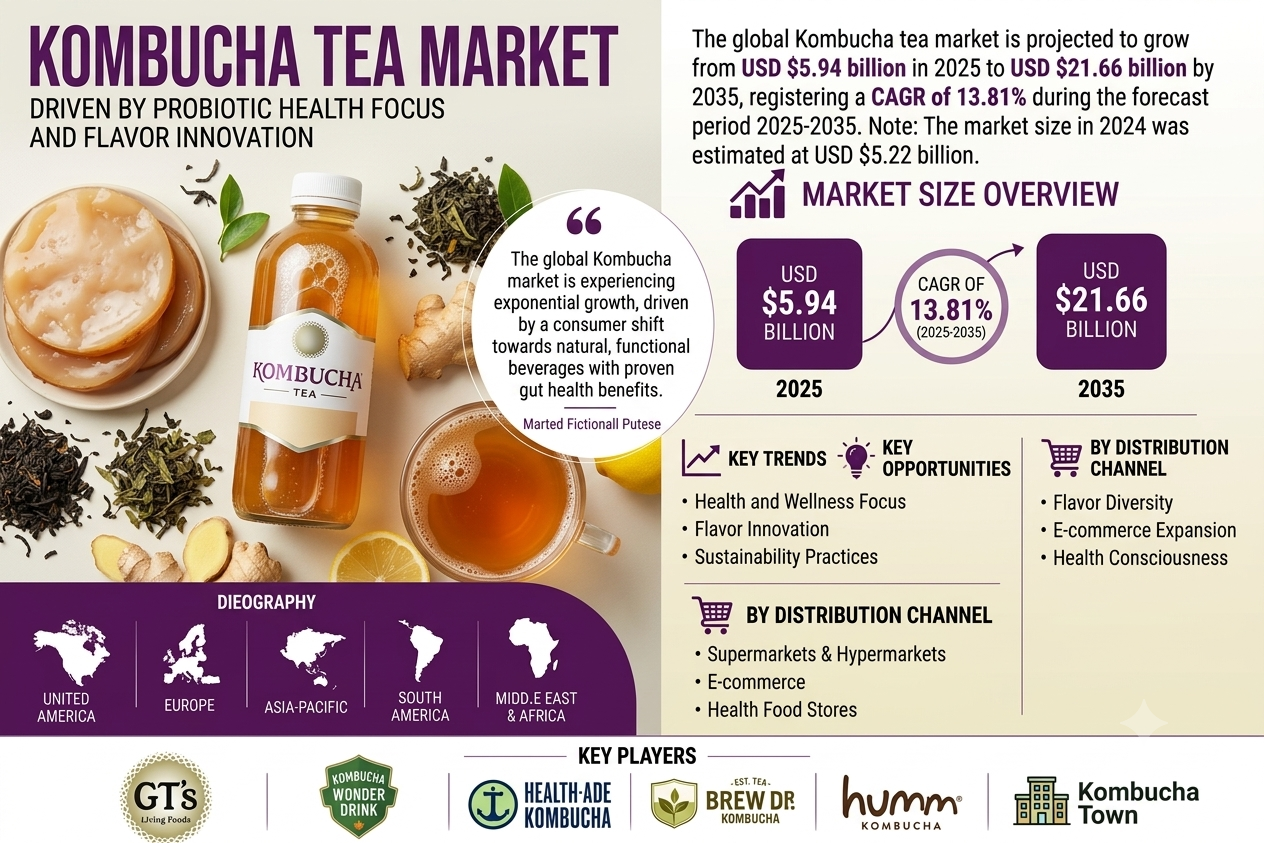
NEW YORK, NY, UNITED STATES, July 17, 2026 /EINPresswire.com/ -- Global kombucha tea market growth is witnessing significant transformation as consumers increasingly shift toward beverages that offer nutritional benefits, digestive support, and natural ingredients. According to Market Research Future analysis, the kombucha tea market size was valued at USD 5.219 billion in 2024 and is projected to expand from USD 5.94 billion in 2025 to USD 21.66 billion by 2035, registering a compound annual growth rate (CAGR) of 13.81% during the forecast period from 2025 to 2035. Growing awareness regarding wellness, increasing preference for fermented beverages, and continuous product innovation are contributing to the expansion of the global kombucha tea industry.— Market Research Future (MRFR)
Market Overview:
The kombucha tea market has emerged as a rapidly expanding segment within the functional beverage industry, driven by rising consumer interest in healthier alternatives to conventional soft drinks. Kombucha is a fermented tea beverage created using tea, sugar, bacteria, and yeast cultures, offering probiotics, organic acids, antioxidants, and other beneficial compounds. Growing awareness of preventive healthcare and wellness-focused lifestyles is encouraging consumers to choose beverages that support overall health and well-being. Changing dietary preferences, increasing demand for clean-label products, and reduced consumption of artificial ingredients are further boosting the adoption of naturally fermented beverages among health-conscious consumers, fitness enthusiasts, and younger generations.
The market growth is also supported by wider product availability across supermarkets, specialty stores, e-commerce platforms, and direct-to-consumer channels. Beverage manufacturers are focusing on innovation by launching new flavors, organic formulations, low-sugar varieties, and premium packaging solutions to attract diverse consumer groups. The addition of ingredients such as fruits, herbs, botanical extracts, and adaptogens is enhancing product appeal and expanding the consumer base. As functional beverages continue to gain popularity worldwide, kombucha tea is positioned as a preferred choice for consumers seeking refreshing drinks with added wellness benefits.
Key Growth Factors:
Rising Consumer Preference for Functional Beverages:
One of the primary factors driving the growth of the kombucha tea market is the increasing demand for functional beverages that provide additional health benefits beyond basic hydration. Consumers are actively searching for products containing probiotics, antioxidants, vitamins, and natural ingredients that align with wellness-focused lifestyles.
Kombucha tea has gained attention due to its association with digestive health and microbiome support. The growing understanding of the relationship between gut health and overall wellness has encouraged consumers to include fermented products in their daily routines. This shift has created opportunities for beverage manufacturers to expand their product portfolios and introduce innovative kombucha-based solutions.
Increasing Awareness About Gut Health and Probiotics:
The growing popularity of probiotics has significantly contributed to the adoption of kombucha tea worldwide. Consumers are increasingly interested in maintaining digestive balance through natural food and beverage choices. Kombucha’s fermentation process creates beneficial microorganisms, making it attractive among individuals seeking functional nutrition.
Health-conscious consumers, particularly millennials and Generation Z, are showing strong interest in beverages that support active lifestyles. This demographic shift has encouraged brands to focus on transparent labeling, clean ingredients, and scientifically supported benefits.
Shift Away from Sugary Carbonated Drinks:
The declining preference for traditional carbonated beverages has created new opportunities for kombucha tea producers. Concerns related to excessive sugar intake, artificial additives, and unhealthy consumption patterns have encouraged consumers to explore healthier beverage alternatives.
Kombucha provides a refreshing option with unique flavors and fermentation characteristics while addressing the demand for cleaner beverage choices. Many manufacturers are positioning kombucha as a replacement for soda and other high-sugar drinks, contributing to broader market adoption.
Product Innovation and Flavor Diversification
Continuous innovation has become a major growth contributor in the kombucha tea market. Manufacturers are experimenting with various flavors, ingredients, and formulations to attract new consumers. Traditional tea-based kombucha products are being expanded with fruit blends, herbal combinations, botanical extracts, and functional ingredients.
Companies are also introducing reduced-sugar and premium organic variants to meet evolving consumer expectations. Innovative packaging designs, convenient bottle sizes, and ready-to-drink formats are further improving consumer accessibility.
Get Full PDF Sample Copy of Report: (Including Full TOC, List of Tables & Figures, Chart) @
https://www.marketresearchfuture.com/sample_request/27065
Emerging Trends:
Growing Demand for Organic and Clean Label Products:
The clean-label movement has become an important trend influencing the kombucha tea market. Consumers increasingly prefer products made with recognizable ingredients and minimal processing. Organic kombucha products are gaining traction as buyers associate organic certification with quality, sustainability, and healthier consumption.
Manufacturers are responding by developing beverages free from artificial flavors, preservatives, and synthetic additives. This trend is expected to continue as transparency and ingredient awareness become key purchasing factors.
Expansion of Ready-to-Drink Beverage Formats:
Convenience is playing an important role in shaping consumer choices. Ready-to-drink kombucha beverages are becoming increasingly popular due to their portability and ease of consumption. Busy lifestyles and increasing demand for on-the-go nutrition have encouraged brands to focus on convenient packaging formats.
Single-serving bottles, cans, and recyclable packaging solutions are becoming more common as companies attempt to improve accessibility and meet sustainability expectations.
Increasing Focus on Sustainable Packaging:
Environmental awareness among consumers has encouraged beverage companies to adopt sustainable packaging practices. Kombucha producers are exploring recyclable materials, eco-friendly bottles, and reduced packaging waste solutions.
Sustainability has become an important factor influencing brand perception, particularly among younger consumers. Companies investing in environmentally responsible packaging strategies are gaining stronger consumer engagement.
Market Opportunities:
The kombucha tea market offers significant opportunities due to rising consumer interest in personalized nutrition and wellness-oriented products. Manufacturers have opportunities to develop specialized beverages targeting different consumer groups, including athletes, fitness enthusiasts, and individuals seeking healthier lifestyle choices.
The expansion of e-commerce and digital retail platforms provides additional growth opportunities for kombucha brands. Online channels allow companies to reach wider audiences, introduce subscription-based models, and educate consumers about product benefits.
Emerging markets in Asia-Pacific, Latin America, and the Middle East are also creating new growth avenues. Increasing urbanization, improving disposable incomes, and growing awareness of functional beverages are encouraging international brands to explore these regions.
Market Segmentation Analysis:
The kombucha tea market is segmented based on product type, distribution channel, packaging, and region. These segments reflect changing consumer preferences, purchasing behaviors, and strategies adopted by manufacturers to meet rising demand for functional beverages.
▪️Product Type Analysis
The market is divided into flavored and original kombucha variants. Original kombucha remains popular among consumers who prefer traditional fermentation methods and natural ingredients. Meanwhile, flavored kombucha is gaining traction due to innovative combinations of fruits, herbs, spices, and botanical ingredients that attract new consumers and improve taste acceptance.
▪️Distribution Channel Analysis
Kombucha tea is distributed through supermarkets, hypermarkets, specialty stores, convenience stores, and online platforms. Supermarkets provide broad consumer reach, while specialty stores attract wellness-focused customers. Online retail is expanding rapidly due to convenience, direct-to-consumer sales, and wider product accessibility.
▪️Packaging Analysis
Kombucha products are available in glass bottles, cans, plastic bottles, and other formats. Glass packaging is preferred by premium brands due to quality preservation and sustainability appeal. Cans are gaining popularity for portability, while manufacturers are increasingly focusing on recyclable and eco-friendly packaging solutions to meet consumer expectations.
Regional Outlook:
The global kombucha tea market is expanding across North America, Europe, Asia-Pacific, South America, and the Middle East & Africa, with growth influenced by changing consumer lifestyles, rising health awareness, retail development, and demand for functional beverages. North America remains a leading market due to strong consumer interest in wellness products, clean-label beverages, and natural alternatives to sugary drinks. The United States has witnessed significant adoption of kombucha among health-conscious consumers, supported by established brands, diverse product launches, and strong distribution networks.
Europe is experiencing steady growth as consumers increasingly prefer organic, sustainable, and fermented beverages. The rising popularity of plant-based lifestyles and eco-friendly packaging is encouraging manufacturers to introduce innovative kombucha products. Asia-Pacific offers strong growth potential due to increasing urbanization, rising disposable incomes, and traditional acceptance of fermented foods. Companies are focusing on regional flavors and customized formulations to attract local consumers.
South America and the Middle East & Africa are emerging markets with growing interest in healthier beverage choices. Expanding retail channels, increasing wellness awareness, and rising availability of premium functional drinks are supporting market development in these regions. Manufacturers are exploring new opportunities through localized flavors, digital sales platforms, and sustainable product strategies to strengthen their presence in developing markets.
Opportunities for Market Participants:
Companies in the kombucha tea market have several opportunities to expand their presence through product innovation, wider distribution, and consumer engagement strategies. Product diversification, including new flavors, functional formulations, and convenient packaging options, can help brands attract different consumer groups and increase market penetration.
Strengthening distribution networks through partnerships with supermarkets, health stores, convenience retailers, and e-commerce platforms will improve product accessibility and support sales growth. Collaborations with wellness communities, fitness groups, and nutrition platforms can further enhance consumer awareness by educating customers about kombucha’s fermentation process and functional attributes. Additionally, investing in sustainable sourcing, eco-friendly packaging, and responsible production practices can help brands meet growing environmental expectations. Companies that combine innovation, digital engagement, and sustainability-focused strategies will be better positioned to capture emerging opportunities in the expanding kombucha tea market.
Competitive Landscape:
The kombucha tea market is becoming increasingly competitive as global beverage companies and specialized kombucha brands focus on expanding their presence in the growing functional beverage sector. Companies are adopting strategies such as product innovation, new flavor launches, sustainable packaging, strategic collaborations, and wider distribution networks to attract health-conscious consumers. The rising demand for organic, low-sugar, and naturally fermented beverages is encouraging brands to develop differentiated product offerings.
Key players in the kombucha tea market are investing in research and development to improve product quality, introduce innovative formulations, and meet evolving consumer preferences. Established brands are strengthening their market position through retail expansion and digital sales channels, while emerging companies are targeting niche segments such as premium, organic, and locally crafted kombucha. As consumer interest in wellness-oriented beverages continues to grow, competition among market participants is expected to intensify, driving further innovation and market development.
Key companies operating in the market include:
▪️GT's Living Foods (US)
▪️Kombucha Wonder Drink (US)
▪️Health-Ade Kombucha (US)
▪️Brew Dr. Kombucha (US)
▪️Humm Kombucha (US)
▪️Kombucha Town (US)
▪️Revive Kombucha (US)
▪️and Kombucha Culture (US).
Market Challenges and Restraints:
Although the kombucha tea market is expanding rapidly, several challenges may affect its growth during the forecast period. Limited consumer awareness in some regions remains a key barrier, as many potential customers are unfamiliar with kombucha’s fermentation process, taste profile, and functional benefits. The naturally fermented flavor of kombucha may also require consumer adaptation compared with traditional beverages. To overcome this challenge, manufacturers are focusing on flavor innovation, product education, and improved marketing strategies to increase acceptance among new consumers.
Production complexities and regulatory requirements also create challenges for market participants. Maintaining consistent quality, taste, and safety during the fermentation process requires advanced production controls and strict quality management practices. Additionally, varying regulations related to labeling, ingredient declarations, and health claims across different regions can impact market operations. Kombucha companies also face competition from other functional beverages, including probiotic drinks, herbal beverages, and enhanced waters, making continuous innovation and product differentiation essential for long-term growth.
Future Outlook:
The future outlook for the kombucha tea market remains positive as consumers increasingly prioritize healthier, functional, and natural beverage choices. Growing awareness of wellness, preventive healthcare, gut health, and clean-label products is expected to drive long-term market expansion. Between 2025 and 2035, kombucha is anticipated to gain wider acceptance among mainstream consumers as product availability improves and brands continue to introduce innovative offerings beyond traditional wellness communities.
Future growth will be shaped by product innovation, sustainability initiatives, and digital expansion. Manufacturers are expected to develop new kombucha varieties with functional ingredients such as botanical extracts, vitamins, minerals, and adaptogens to meet diverse consumer needs. Sustainable packaging, responsible sourcing, and eco-friendly production methods will become increasingly important as environmental awareness rises. Additionally, online retail, direct-to-consumer channels, and social media marketing will help brands educate consumers and expand their reach. Emerging markets with rising health awareness, urbanization, and improving retail infrastructure are also expected to create new opportunities for kombucha tea adoption.
Frequently Asked Questions (FAQs)?
1. What is driving the growth of the kombucha tea market?
The market growth is driven by rising demand for functional beverages, increasing awareness of gut health, preference for natural ingredients, and growing interest in healthier alternatives to sugary drinks.
2. Which companies are leading the kombucha tea market?
Key companies include GT's Living Foods, Kombucha Wonder Drink, Health-Ade Kombucha, Brew Dr. Kombucha, Humm Kombucha, Kombucha Town, Revive Kombucha, and Kombucha Culture.
3. What are the major trends influencing the kombucha tea industry?
Key trends include organic product demand, flavor innovation, sustainable packaging, ready-to-drink formats, and increasing consumer focus on wellness and healthy lifestyles.
Discover Related Research Reports By Market Research Future:
Black Tea Extract Market:
https://www.marketresearchfuture.com/reports/black-tea-extract-market-29403
Green Tea Leave Market:
https://www.marketresearchfuture.com/reports/green-tea-leave-market-32942
Detox Tea Market:
https://www.marketresearchfuture.com/reports/detox-tea-market-14018
Sagar Kadam
Market Research Future
+1 628-258-0071
email us here
Legal Disclaimer:
EIN Presswire provides this news content "as is" without warranty of any kind. We do not accept any responsibility or liability for the accuracy, content, images, videos, licenses, completeness, legality, or reliability of the information contained in this article. If you have any complaints or copyright issues related to this article, kindly contact the author above.
